The design of common areas in nursing homes plays a crucial role in supporting the physical and psychological well-being of elderly residents. By integrating realistic natural light and sky simulations, CoeLux transforms shared spaces into more stimulating and comfortable environments, encouraging participation in daily activities while improving mood, comfort, and overall quality of life.
Rethinking Common Areas in Nursing Homes: Architecture, Engagement, and the CoeLux Sky
One of the main issues affecting the well-being of elderly people in nursing homes is being bedridden, defined as the progressive tendency to remain lying down or inactive. This condition is particularly widespread in the geriatric population and leads to a rapid deterioration of mobility, independence, and quality of life.
Scientific literature highlights how early mobilization and the performance of even simple activities are essential to counteract this decline. Interventions based on functional exercises and daily activities, such as standing up, walking, and participating in guided activities,improve autonomy, reduce the risk of falls, and slow functional decline in frail older adults.
Light recreational and physical activities, when integrated into daily routines, are also effective in keeping individuals active.
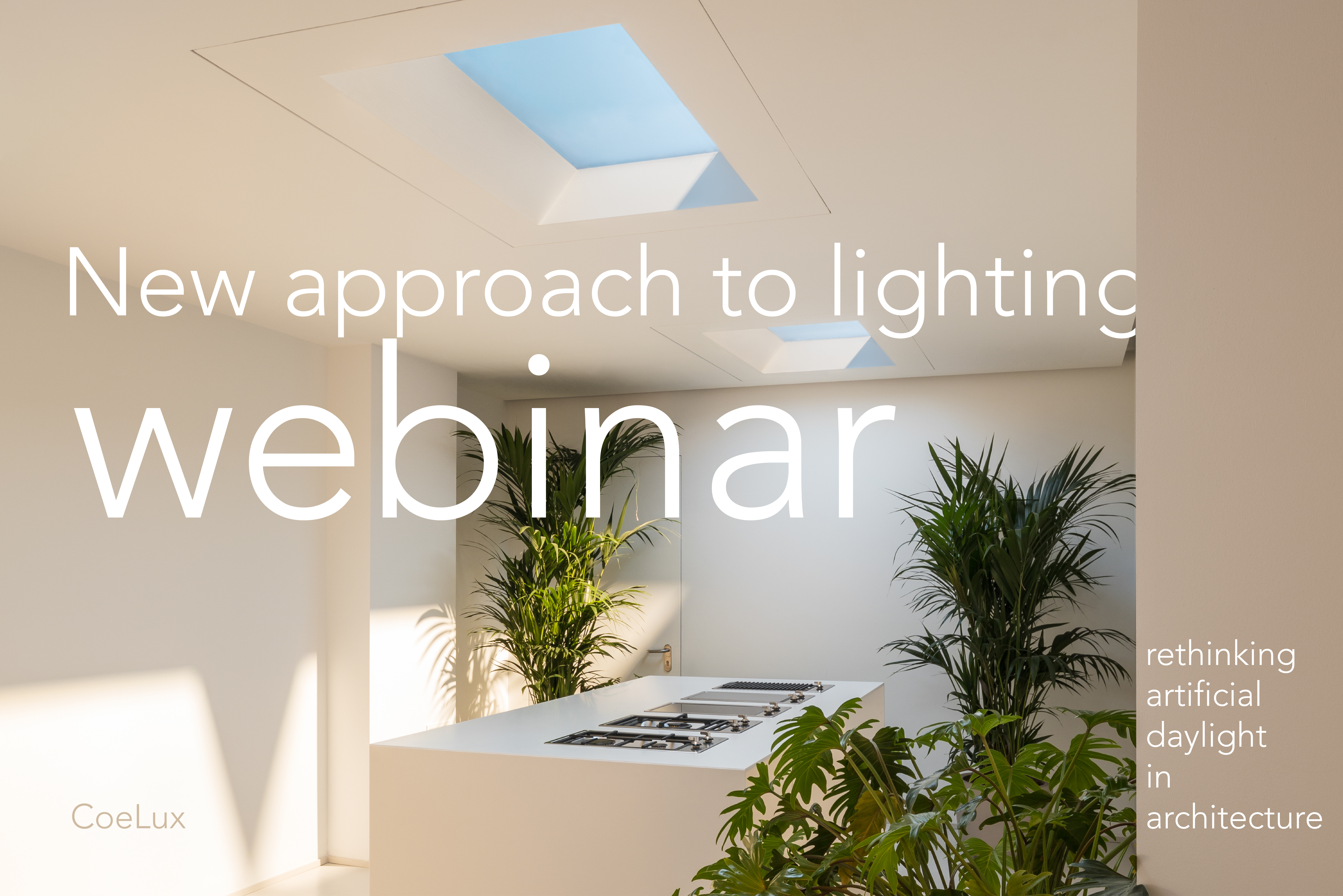
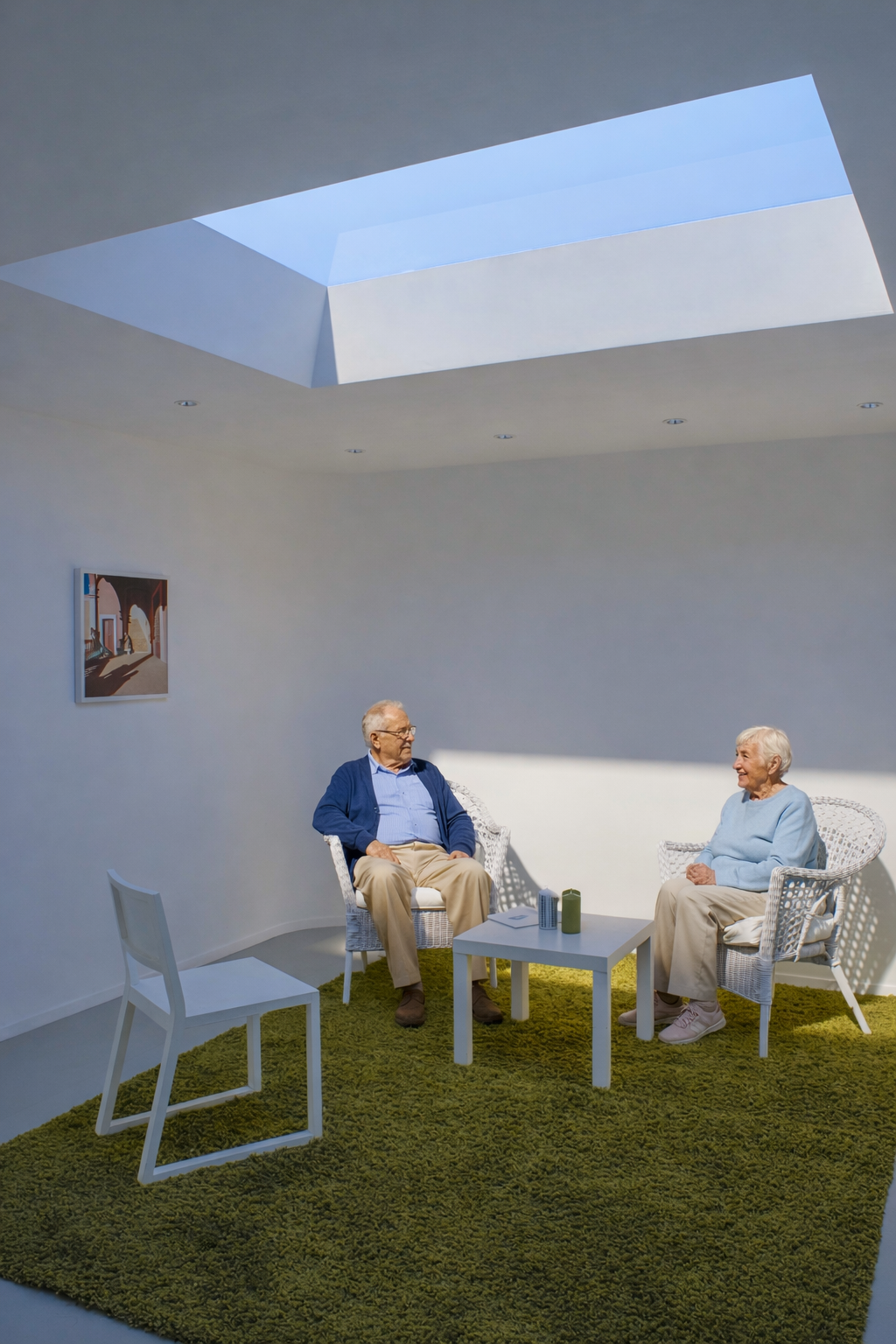
In this context, it becomes strategic to rethink common areas in elderly care facilities as environments capable of stimulating movement and engagement. The integration of solutions such as CoeLux can represent an innovative element: the realistic reproduction of natural light and the sky has been shown to have positive effects on psychological well-being, reducing stress and improving mood, while also supporting circadian rhythms and physiological processes related to health.
Studies and real-world applications also show that environments illuminated with natural light or advanced simulations can improve attention, comfort, and spatial perception, encouraging greater activation of individuals.
Designing common areas illuminated with CoeLux, dedicated to light physical and recreational activities, therefore means acting simultaneously on two key drivers of geriatric well-being: on one hand, stimulating movement and preventing bedridden conditions, and on the other, enhancing environmental and motivational quality, creating more favorable conditions for the active participation of residents.
Want to see how CoeLux integrates into real healthcare environments?
- Prestifilippo, M., Zompanti, A., Brambilla, A., & Lucchi, E. (2017). Effects of artificial skylight on psychological and physiological wellbeing: A pilot study on CoeLux lighting systems. In Proceedings of the International Conference on Environmental Psychology (ICEP).
- Fregna, P., Lucchi, E., & Prestifilippo, M. (2024). Artificial skylight improves sleep quality and emotional state in windowless offices: A randomized controlled study. Journal of Affective Disorders, 350, 123–131.
- Yasukouchi, A., & Ishibashi, K. (2019). Effects of artificial skylight on human physiology and behavior: Evaluation using blue sky simulation. Journal of Physiological Anthropology, 38(1), 12.
- Canazei, M., Pohl, W., & Bliem, H. R. (2017). Effects of a dynamic daylight-like LED lighting system on mood and cognitive performance. Gerontology, 63(3), 270–275.